Antique band pattern chart
A while ago I was gifted a band by a friend who had bought a withy, which is a branch that had been twisted into a ring to be used as a latch (or holding things together) in a rural setting. The band was tied to the withy and has probably started its life as an accessory, but as it got worn with time it was degraded to a practical function like closing a gate. The use of withies was supplemented by manufactured items during the industrialization, and so the fibers of the band in combination with the fact that it was tied to a withy makes me guess that it should be dated to pre industrialization but post generalized import of cotton yarn. That places us around 1890-1920, in a rough guesstimate. The yarn used is a red wool yarn, spun by either machine or hand and a thinner white cotton yarn, most probably spun by machine.
I made a post about this band in instagram the other day, asking if anyone would like the pattern chart for it, and you did, so here it is!
I have charted it out as well as I could, but not test woven it. If you do, I’d love feedback!
This style of band is called a “pickup band” because the pattern is created by manually picking some of the warp threads up and down. I have described this process, along with what yarns to use, and how to read the charts, in my book Simple weave which is available in my web shop in Swedish and English.
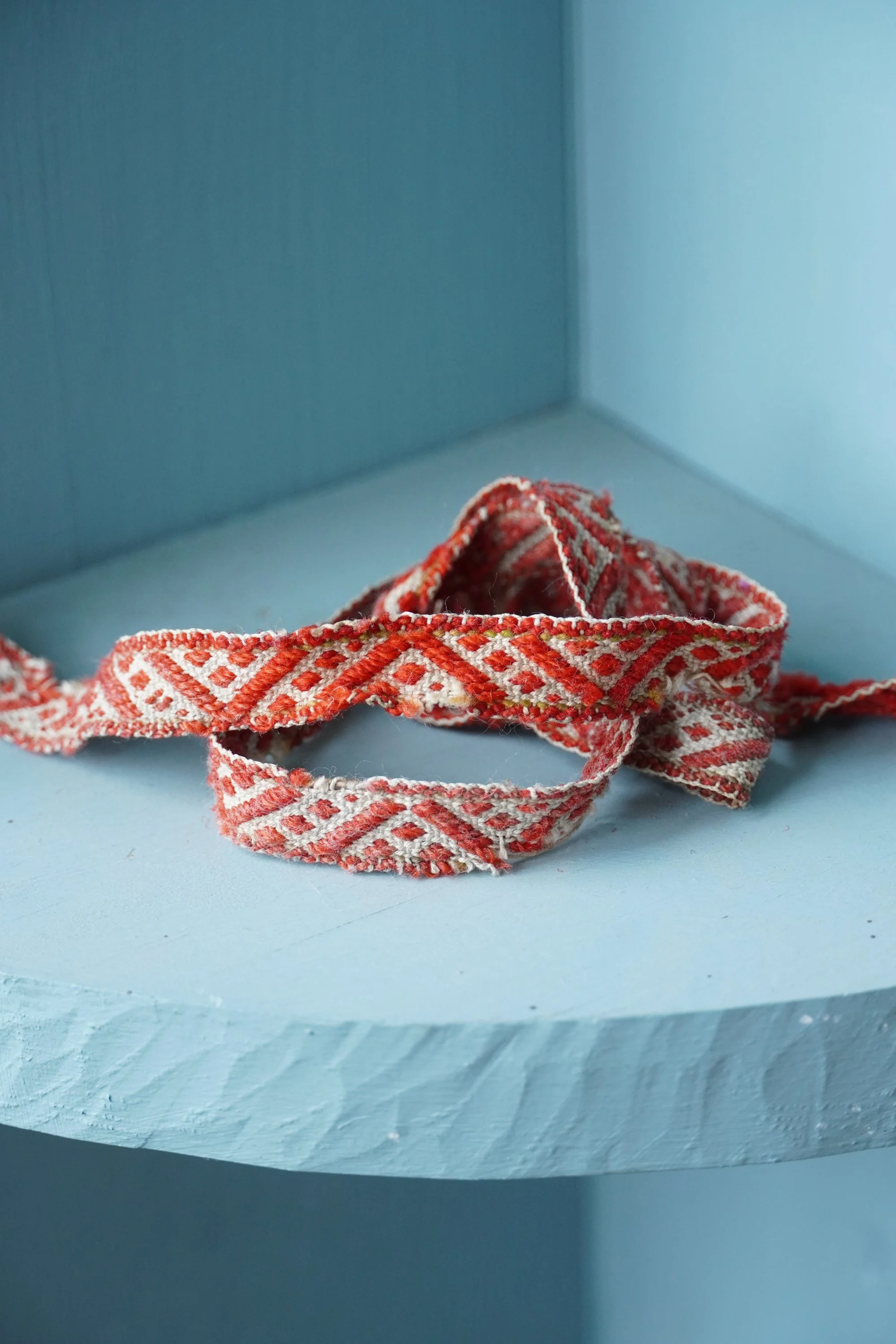
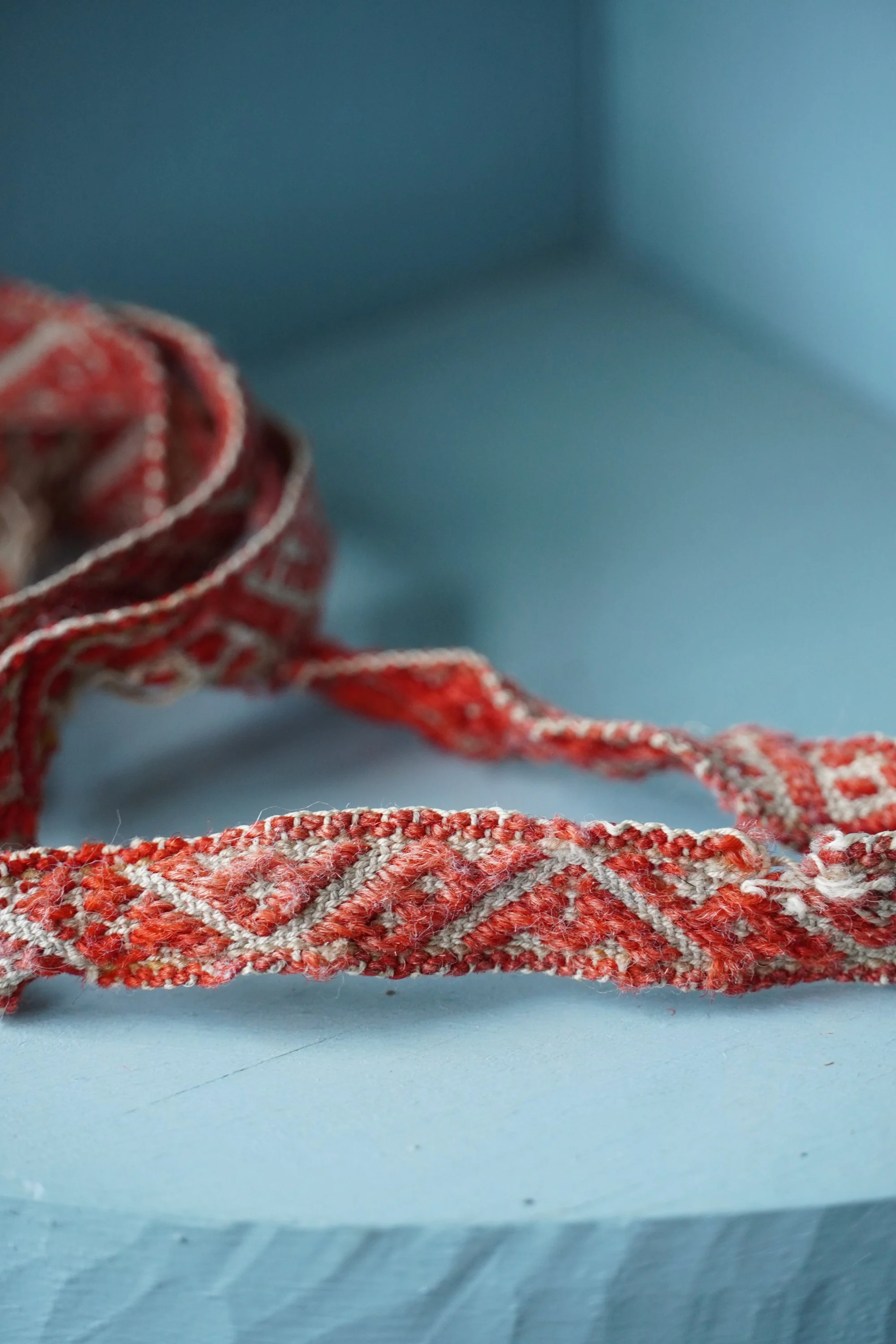
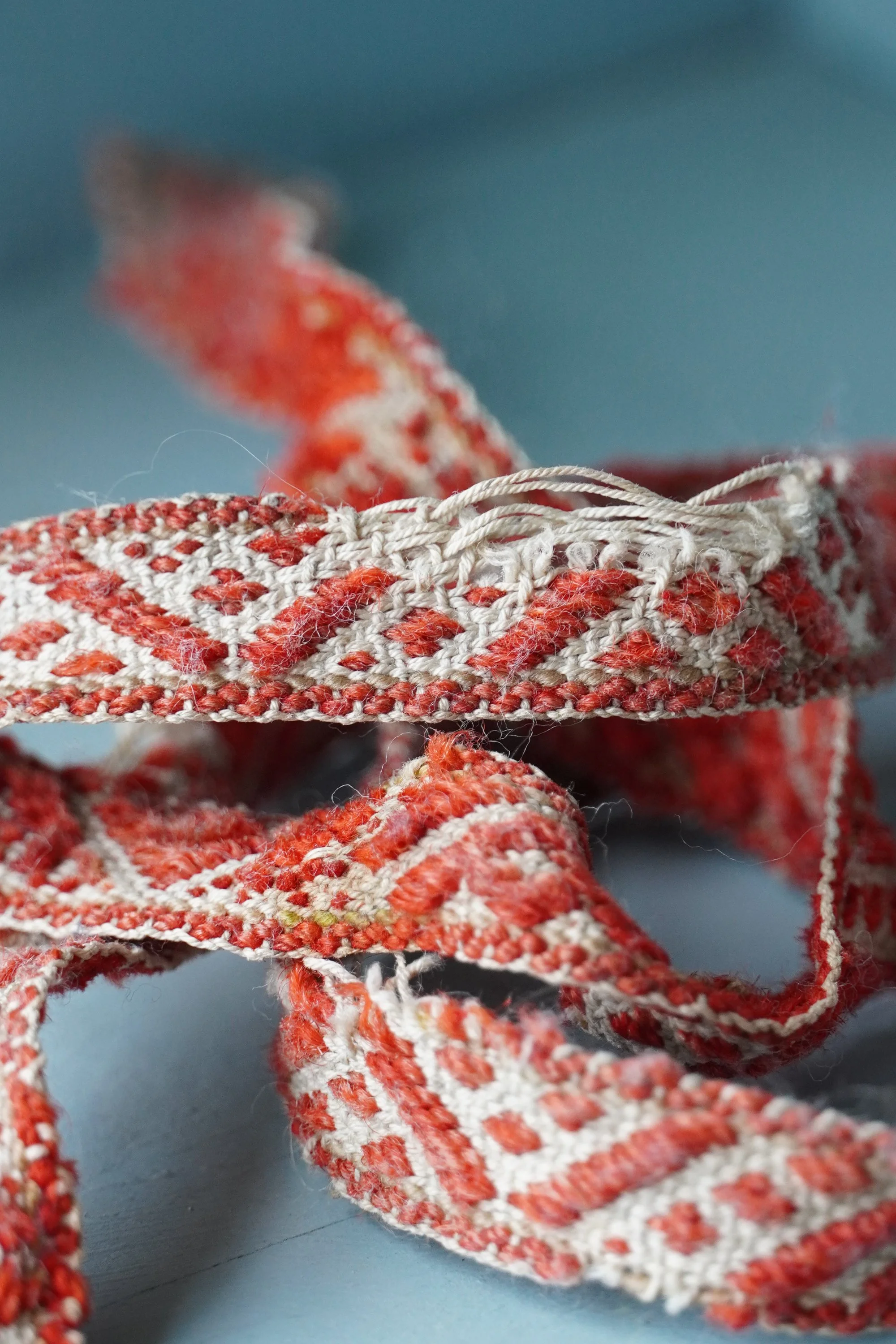
This band was tied up in a knot when I got it, and when I untied it it turned out that the colors of the yarn had been preserved inside the folds of the knots. On the parts that have been exposed to the sun and weather the red yarn still holds color pretty well, but its very hard to spot that there’s one yellow strand of wool yarn at the edge as well. It can also be seen on the lesser worn parts though!
The threading chart

Typically, when speaking about pickup patterned bands, a colored square will indicate a pattern thread, and each pattern thread will be represented by a vertical row in the pickup chart like the one below.
This band has a pickup chart of 9 threads but there are more than 9 colored threads in the threading chart above, because while this band is woven like a pickup style band it also has bordering edges of strands that are not picked but rather just treated as a part of the background weave. These borders are made up of one white thread, two red ones and one yellow thread, and in the threading chart you see these threads as the first and last two strands in each row.
The pickup chart
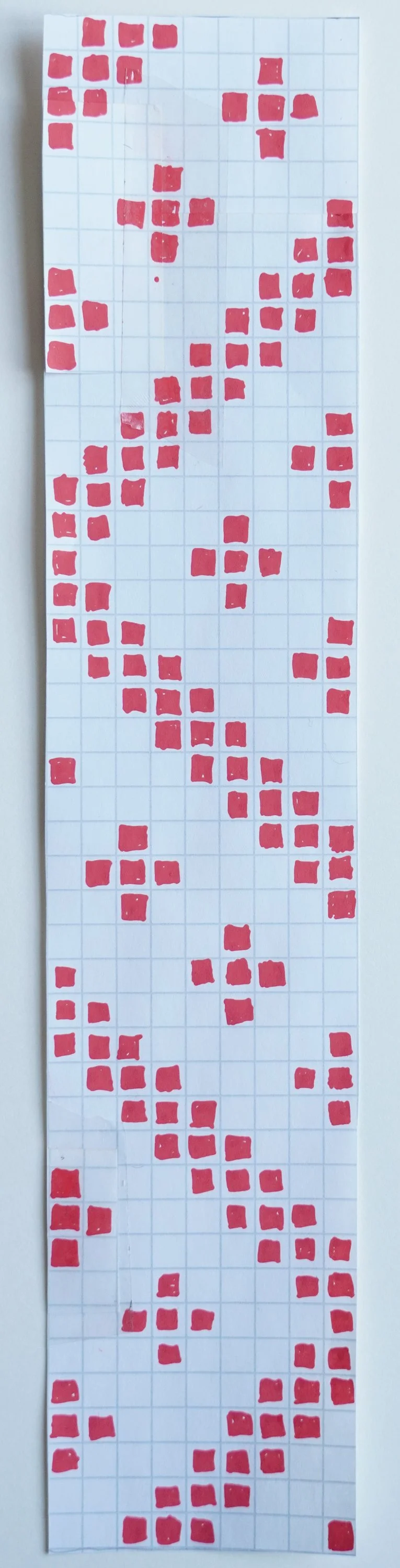
In this chart, each horizontal row represents one pass of the weft, and each vertical row represents a pattern thread. The furthest left thread in the chart is the fifth thread from the left in your threaded heddle, and the furthest thread to the right in the chart represents the fifth thread from the right in your heddle. Pick only the pattern threads marked out in the chart, and leave the ones on the sides to do their own thing: They will create a nice border to enclose your pattern.
I like to read charts from the top down, and when you reach the end of this chart you can start over again from the bottom to make it continue without any disruption.
Ps. Yes, posting the chart vertically came out as clunky in the blogs format, but I think it's better than to rotate it to vertical, which would be more pleasing to the eye but make it less useful.